10.0.0.10 Login
10.0.0.10 is a private IP address used as the default gateway for specific routers, modems, and Piso WiFi systems. When you enter this IP into your browser, it opens the device’s admin panel, where you can change the WiFi name and password, manage connected devices, adjust security settings, or configure your Piso WiFi portal.
While most people are familiar with common router IPs like 192.168.1.1 or 192.168.0.1, the 10.0.0.10 gateway is used by select brands and setups. It is often chosen to prevent network conflicts and provide a clean, dedicated access point for configuration. Devices from BDCOM, Celeno, and many Piso WiFi systems usually use this IP address.
If your network is assigned to 10.0.0.10, understanding how it works helps you avoid login mistakes, such as typing 10.0.10 or 10.0.0.010. It makes it easier to manage or troubleshoot your router settings whenever needed.
When and Why You Need to Access 10.0.0.10
- Accessing the 10.0.0.10 admin page becomes useful whenever you need to manage or adjust your network. Some of the most common reasons include:
- Changing the WiFi name and password
- Updating or managing admin-level settings
- Checking which devices are currently connected
- Configuring Piso WiFi controls, such as usage limits and time pauses.
- Whenever you want to customize or secure your network, the 10.0.0.10 gateway is where you’ll find those options.
Note that this is frequently a typo for the 10.0.0.0.1 Piso WiFi gateway.
How to Log In to the 10.0.0.10 Admin Panel
Before you open the admin page, make sure you meet the basic requirements:
1. Connection Requirements
Your phone, laptop, or computer must be connected to the router’s network using WiFi or an Ethernet cable.
2. Opening a Browser
Launch any browser, such as Chrome, Firefox, or Edge.
3. Correct URL Entry
Type the exact address:
http://10.0.0.10
Avoid mistyped versions such as 10.0.10, 10.0.0.010, or 10.0.0.l0.
Even a small mistake will prevent the page from loading.
4. Default Login Details
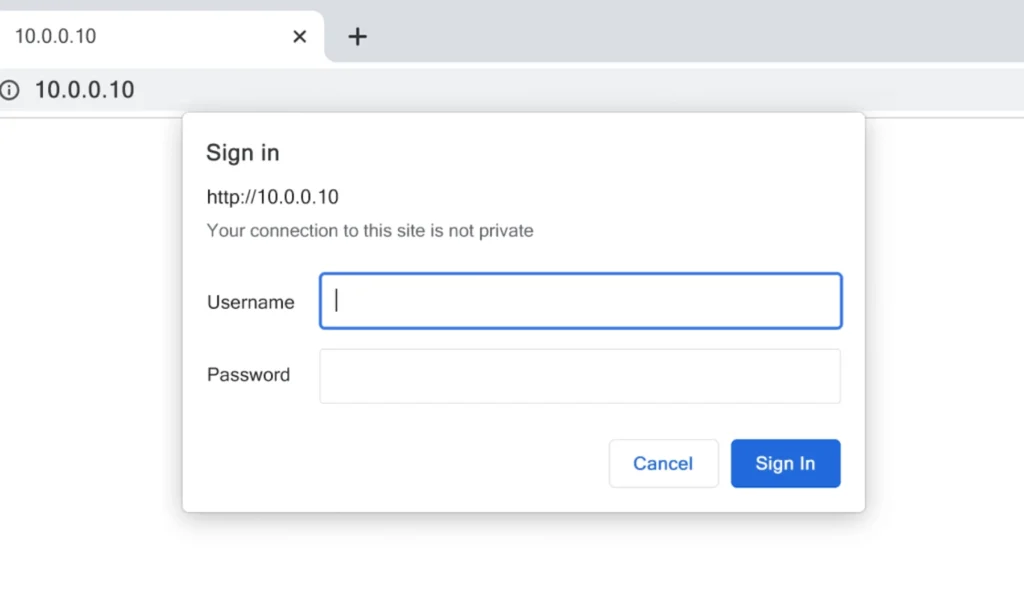
Enter the username and password printed on your router label or provided by your ISP.
Common defaults include:
- admin
- user
- root
5. Accessing the Dashboard
Once logged in, you’ll see the main settings page where you can adjust WiFi options, device lists, and security settings.
This range is typically managed by those also utilizing the 10.10.10.1 administrative IP.
Changing WiFi Name (SSID) and Password via 10.0.0.10
Updating your WiFi name and password through the 10.0.0.10 admin page helps secure your network and keeps unwanted users out. Here’s how to change these settings safely and correctly.
1. Navigate to the Wireless or WiFi Settings
After logging in to the 10.0.0.10 dashboard, look for the Wireless, WiFi, or Network Settings section.
Inside this menu, you’ll find fields for your SSID (WiFi name) and your WiFi password.
2. Create a Strong and Unique Password
Choose a password that is difficult for others to guess.
A strong password usually includes:
- Uppercase and lowercase letters
- Numbers
- Symbols
- At least 10 to 12 characters
Avoid using personal information like birthdays, names, or simple patterns.
3. Save Your Settings and Reconnect Devices
Once you enter your new SSID and password, click Save, Apply, or Update, depending on your router model.
Your router may reboot, and all connected devices will disconnect.
Reconnect each device using the new WiFi details.
4. Dual-Band Network Considerations (2.4 GHz and 5 GHz)
If your router has both 2.4 GHz and 5 GHz bands, you may need to update each one separately.
You can:
- Use the same name and password for both, or
- Create different names to easily identify the faster band.
Refer to our default router login guide for easy access to multiple admin panels.
10.0.0.10 Piso WiFi Login Guide
Piso WiFi systems commonly use the 10.0.0.10 gateway to let users access their connection portal. On this page, customers can enter their voucher or coin-generated codes, check their remaining time, and use helpful features such as pause and resume. Before opening the portal, make sure your device is connected to the correct Piso WiFi network.
How Users Access the Piso WiFi Portal
- Connect your phone, tablet, or laptop to the Piso WiFi network.
- Open a web browser such as Chrome or Safari.
- Type http://10.0.0.10 or http://10.0.0.10/admin in the address bar.
- The Piso WiFi homepage will appear automatically and load the user dashboard.
Entering Voucher or Coin-Based Codes
Depending on the system, users can:
- Enter a printed voucher code, or
- Use a code generated after inserting coins in the Piso machine.
Once the code is entered, the system will activate your session and start counting the available time.
Monitoring Time, Balance, and Pause Features
Inside the portal, users can:
- View remaining minutes or data balance
- Pause their time to save unused minutes.
- Resume the session when ready.
- Disconnect when finished.
These features help users control their connection more efficiently and avoid wasting credits.
Safety Notes for Operators
Operators should ensure:
- Their admin panel is password-protected
- The 10.0.0.10 portal is kept secure and not shared publicly.
- The firmware has been updated to prevent unauthorized access.
- Coin slots and voucher systems are tested regularly.
A secure setup protects both the business and the customers.
Step-by-Step Login Guide
Follow this simple sequence to reach the 10.0.0.10 admin dashboard:
Connect your device to the router's WiFi or use an Ethernet cable.
Open your preferred web browser.
Type http://10.0.0.10 in the address bar and press Enter.
Enter the correct username and password when the login page appears.
Navigate through the admin menu to change WiFi details, view devices, or edit network settings.
Save your changes so the router can apply the new configuration.
Using the Piso WiFi Pause Time Feature
The Pause Time function is one of the most valuable tools offered in Piso WiFi systems. It allows users to temporarily pause their session so their remaining minutes aren’t wasted when they’re not actively using the internet.
What Pause Time Is
Pause Time is a feature in the Piso WiFi portal that lets customers pause their current session. When paused, the timer stops counting down, and the remaining time is saved until the user reconnects.
Benefits of the Pause Feature
Using Pause Time offers several practical advantages:
- It protects your remaining minutes from being consumed while you’re away.
- It gives users complete control over their internet usage.
- It helps prevent unwanted devices or people from using your paid session.
- It can improve overall network efficiency during busy hours.
This feature is beneficial for students, gamers, or anyone who wants to maximize the value of their paid connection.
Step-by-Step Instructions
Here’s how to use the Pause Time option on a Piso WiFi network:
- Connect your device to the Piso WiFi hotspot.
- Open your preferred browser.
- Go to http://10.0.0.10 to open the Piso portal.
- On the user dashboard, look for the Pause button or Pause Time option.
- Tap or click it to freeze your session.
- When you’re ready to continue, simply press Resume to resume using your time.
Default Username and Password List for 10.0.0.10 Routers
Many routers and Piso WiFi devices that use 10.0.0.10 come with preset login details. These credentials are usually printed on the router’s sticker or included in the manual. Below is a general reference list based on common brands and models that use the 10.0.0.10 gateway.
Default Login Credentials by Brand/Model
Brand / Device | Username | Password |
Generic Router | admin | admin |
BDCOM | admin | admin |
Celeno Devices | none | none |
Piso WiFi Machines | admin | 1234 |
TP-Link (select units) | admin | admin |
Huawei | admin | admin |
ZTE | admin | admin |
PLDT / ISP Routers | admin | 12345678 |
Custom Firmware Units | admin | password |
Note: Exact logins vary depending on firmware version, ISP configuration, or model variations.
What to Do If None of the Logins Work
If the default credentials don’t let you into the 10.0.0.10 admin page, try the following:
- Double-check the username and password printed on the router label
- Try common alternatives such as:
- admin/password
- admin / 1234
- user/user
- root/admin
- admin/password
- Clear your browser cache and retry the login page.
- Reboot the router and try again.
- Contact your ISP if they preconfigured the device.
As a last resort, consider resetting the device to factory settings (if safe and allowed).
Where to Find the Correct Default Login
If you’re unsure which login applies to your device, check these places:
- The sticker on the back or bottom of the router
- The printed user manual or quick-start guide
- The official website of the router brand
- The ISP documentation, if your internet provider issued the router
- The Piso WiFi vendo machine label (for Piso systems)
Common 10.0.0.10 Mistakes and Wrong IP Addresses
Because 10.0.0.10 contains several zeros, it’s easy to mistype. Even a single incorrect character will stop the login page from loading. Entering the correct IP is essential if you want to access your router or Piso WiFi settings without errors.
Most Frequent Typos
Mistyped Version | Why It’s Incorrect | Correct IP |
10.0.10 | Missing a zero | 10.0.0.10 |
10.0.0.010 | Extra zero added | 10.0.0.10 |
10.o.0.10 | Letter “o” instead of zero | 10.0.0.10 |
10.0.0.l0 | Using lowercase “L” instead of zero | 10.0.0.10 |
100.0.0.10 | Too many digits | 10.0.0.10 |
10,0,0,10 | Commas instead of dots | 10.0.0.10 |
A completely different IP | 10.0.0.10 |
Why These Typos Fail
These incorrect versions do not match any valid local IP address assigned by your router. When typed into the browser, they lead to:
- Blank pages
- Time-out errors
- The wrong device interface
- “Site cannot be reached” messages.
Only the exact IP address will open the correct admin portal.
Correct IP Version
To access the admin panel, always use:
10.0.0.10
Typing it accurately ensures you reach the router’s login page without any issues.
Troubleshooting 10.0.0.10 Not Working
If the 10.0.0.10 login page won’t load, the issue is usually easy to fix. Most problems come from incorrect IP entry, connection issues, or temporary router errors. Use the checklist below to identify and solve the problem quickly.
Wrong Gateway IP
Many devices do not actually use 10.0.0.10 as their default login address. If your router uses something different, the page will never load.
Common alternatives include:
If 10.0.0.10 doesn’t respond, it may not be your assigned gateway.
Not Connected to the Router
You must be connected to the router’s Wi-Fi or Ethernet.
If you’re on:
- Mobile data
- A different WiFi network
- A hotspot
…the 10.0.0.10 page will show errors or fail to load entirely.
Browser Cache Errors
Old cached pages or cookies can interfere with the login screen.
Fix it by:
- Refreshing the page
- Clearing your browser’s cache
- Using a different browser
Sometimes, a simple refresh is enough.
Router Glitches (Restart or Factory Reset)
Routers can develop temporary bugs, memory overload, or connectivity issues.
Try the following:
- Restart the router and wait 10 to 20 seconds.
- If the page still doesn’t open, perform a factory reset by pressing the reset button for about 10–15 seconds.
Resetting will restore the original admin credentials.
Forgotten Admin Password
If you changed your login credentials and can’t remember them, the admin page will stay locked.
The only reliable fix is a factory reset, which returns the device to its original username and password.
Use 192.168.1.254 to troubleshoot frequent login problems.
Access 192.168.18.1 to manage advanced settings on your Huawei router.
Security Tips After Logging In
Once you gain access to the 10.0.0.10 admin panel, it’s essential to secure your network to prevent unauthorized access and protect your data. Here are the most critical security steps every user should follow.
Update Default Credentials
The first thing you should do is change the default username and password. Default logins are widely known and make your network vulnerable.
Choose a strong password that includes letters, numbers, and symbols.
Enable WPA2 or WPA3 Encryption
Go to your Wireless security settings and make sure your WiFi is protected using WPA2 or WPA3, depending on what your router supports.
Avoid outdated options like WEP, which are easy to crack.
Block Unknown Devices
Most admin panels include a list of connected devices.
If you see unfamiliar names or suspicious activity:
- Block the device
- Change your WiFi password.
- Reboot the router to refresh connections.
Disable Remote Access
Remote access allows devices outside your network to access your router settings.
If you don’t specifically need this feature, turn it off.
This helps reduce hacking risks and keeps your admin panel private.
Keep Firmware Updated
Check for firmware updates in your router’s system settings.
Updating firmware:
- Fixes bugs
- Improves security
- Enhances performance
Regular updates help keep your network protected from known vulnerabilities.
10.0.0.10 vs Other Common IPs
Routers and Piso WiFi systems use different gateway addresses depending on the brand, firmware, and network configuration. Understanding how 10.0.0.10 compares to other common IPs helps you identify the correct login page for your device.
10.0.0.10 vs 10.0.0.1
Both IPs come from the same 10. x.x.x private range, but different devices use them.
- 10.0.0.10 is typically found in Piso WiFi systems, BDCOM routers, and customized setups.
- 10.0.0.1 is more common in business-grade routers or ISP-provided devices.
If one address doesn’t load the login page, your router may be using the other.
10.0.0.10 vs 192.168.x.x
The 192.168.x.x range is the most common set of IP addresses for home networks worldwide.
Many home routers from TP-Link, D-Link, Huawei, ZTE, and more use these.
10.0.0.10 is less common and is usually found in specialized equipment or systems, such as Piso WiFi vending networks.
When Routers Use Different Gateways
Routers don’t share a universal login IP. The gateway can differ depending on:
- The manufacturer
- The ISP configuration
- Firmware or software customization
- Whether the router is used for Piso WiFi, home internet, or business networks
If 10.0.0.10 doesn’t open the admin page, checking your actual default gateway is the fastest way to confirm the correct address.
How to Check Your Actual Default Gateway
If you’re not sure whether 10.0.0.10 is the correct IP, you can verify it on your device:
On Windows:
- Press Win + R
- Type cmd and press Enter.
- Type ipconfig
- Find “Default Gateway”
On Android/iPhone:
- Open WiFi settings.
- Tap the connected network.
- Check “Gateway” or “Router” details.
On Mac:
- Go to System Settings → Network.
- Select your WiFi network.
- Look under “Router”.
This shows the exact gateway IP address your router uses.
Accessing 10.0.0.10 From Any Device
You can open the 10.0.0.10 admin page from almost any device as long as it’s connected to the router’s network. While the login steps are similar, each platform has its own best practices to ensure a smooth experience.
Windows
- Connect your PC or laptop to the router via WiFi or Ethernet.
- Open your browser (Chrome, Edge, Firefox).
- Type http://10.0.0.10 into the address bar.
- Enter your admin username and password when prompted.
Best Practice:
Use a wired connection if possible. It’s more stable while applying settings.
macOS
- Join the router’s WiFi network on your MacBook or iMac.
- Open Safari or Chrome.
- Enter 10.0.0.10 in the address bar.
- Log in using the default or updated credentials.
Best Practice:
If the page won’t load, clear Safari’s cache or try an alternate browser.
Android
- Connect your Android phone or tablet to the router’s WiFi.
- Open Chrome or your preferred browser.
- Type 10.0.0.10 and tap Go.
- Enter the admin login details.
Best Practice:
Disable mobile data temporarily so the browser doesn’t switch to the mobile network.
iPhone / iPad
- Connect your iOS device to the router’s WiFi.
- Open Safari or Chrome.
- Enter http://10.0.0.10 and tap Enter.
- Enter your login credentials to access the dashboard.
Best Practice:
If the page doesn’t load, try reconnecting to the WiFi network to refresh the gateway settings.
Final Thoughts
10.0.0.10 is a powerful gateway used in select routers and Piso WiFi systems, giving full access to network settings, device management, and WiFi controls. Whether you’re adjusting SSID details, managing users, or securing your network, understanding how this IP works ensures smooth setup and stronger protection.
Frequently Asked Questions
What is 10.0.0.10 used for?
It’s a private IP address used to access the admin panel of certain routers and Piso WiFi systems.
How do I log in to 10.0.0.10?
Connect to the router’s WiFi, open a browser, type http://10.0.0.10, and enter your username and password.
Why can't I access 10.0.0.10?
You may be typing the wrong IP address, not be connected to the router, or your router may use a different gateway.
Is 10.0.0.10 the same as 10.0.0.1?
No. They are different gateway addresses used by different router models.
How do I reset the router if I've forgotten the password?
Press and hold the router’s reset button for about 10–15 seconds to restore factory settings.
How do I use Piso WiFi pause time?
Open http://10.0.0.10, go to the user portal, and tap the Pause button to stop your session and save your remaining time.