
10.0.0.0.1 - 10.0.0.1 Admin Login
When an individual types 10.0.0.0.1 admin login, they receive an error when opening the router settings. This is an erroneous address that many people type daily. The proper address is 10.0.0.1, and you can access the router settings to change the WiFi password and network name (SSID), and to create a guest network.
This is a special IP address, 10.0.0.1, which is part of the 24-bit block of local-area network private IP addresses. Other brands, such as LPB Piso WiFi and Xfinity Comcast, use this IP address as the default for accessing the admin settings at http://10.0.0.1/.
Steps to log in 10.0.0.1
Logging is not a complex process; you just need to connect the router to assess settings. Use the name and password to log in to 10.0.0.1. Follow the steps below to log in,
Step number 1:
Open the web browser you like
Step number 2:
In the address bar, type http://10.0.0.1 or 10.0.0.1, and press Enter. Please don’t write 10.0.0.0.1; it is not correct.
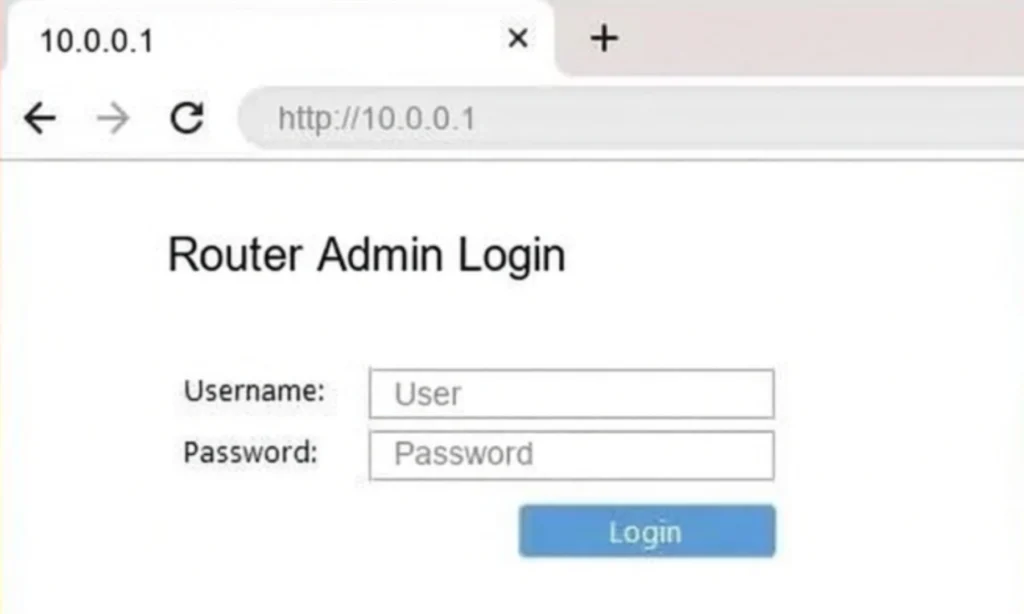
Step number 3:
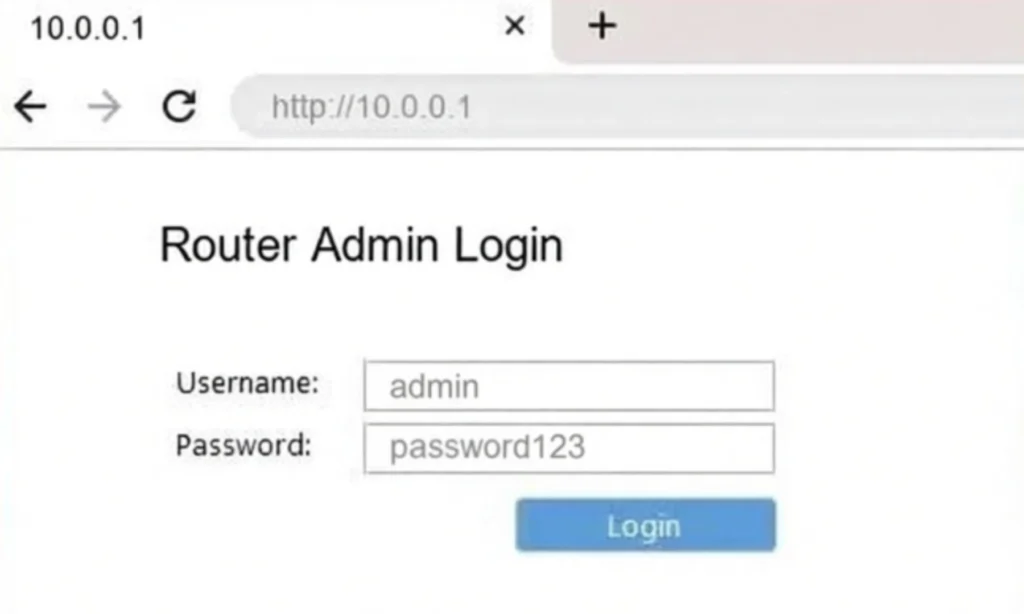
The username and password page will appear. Type the default user name and password.
Pro Tip
This username and password aren’t the same as your WiFi network username and password. In case you haven’t changed it in advance, the default is:
Username: admin
Password: password (If the login credentials didn’t work, take a look at our list.)
Follow our tutorials for specific hardware like the TP-Link router login or the Globe at Home login.
Step number 4:
Click the login link to access the router’s admin panel.
Step number 5:
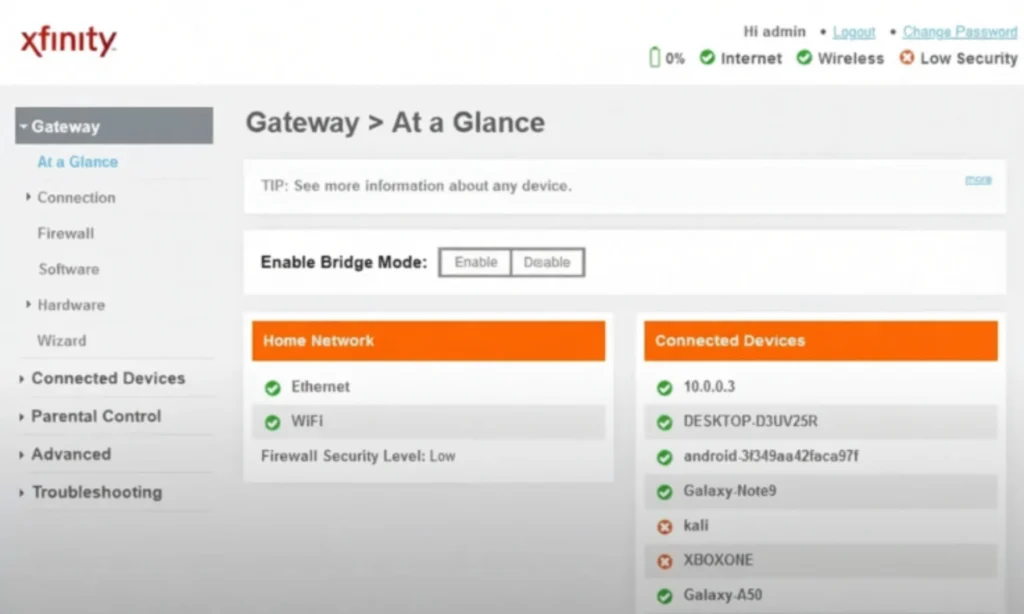
After getting access to the admin dashboard, where you can control settings such as:
- Change your WiFi name (SSID).
- Renew the WiFi password.
- Control pause time for Piso WiFi
- Check or limit connected devices.
- Arrange guest networks
Before managing your local network, browse our router brands directory for official manufacturer guides.
Key notice:
It’s critical to change your default admin password immediately after the first login to protect your data from theft or misuse.
Tips for a strong Password:
- At least an 8-person-long password.
- Use each uppercase and lowercase letter.
- Include numbers and unique characters (which include ! @ # $ ?)
Finding your router IP address is the first step toward securing your WiFi and changing your password.
Common Issues Occurrence with 10.0.0.1
It’s normal for a user to encounter problems logging into the router dashboard. Don’t panic, you’re in the right place, where you will detect the issues first and then find out how to fix them. Here are the common problems.
Entering the Wrong IP Address
A top reason the login page fails to load is a wrong IP address. Users often enter 10.0.0.0.1 or put https://, http://, or www in front. This breaks the address. Type http://10.0.0.1 right into the browser bar. Skip any extra numbers, letters, or marks. An IPv4 address consists of four groups of numbers separated by dots.
Login Page Stuck on Loading
You enter the correct IP address, yet the page hangs. Browser glitches or quick network hiccups cause it. Restart your router. Wait 30 seconds. Reconnect after. Switch to Chrome, Edge, or Firefox. Clear cache and cookies. That fixes it much of the time. Disable VPN or proxy if on. Private or Incognito Mode helps too.
Device Not Linked to the Router
The router admin page opens only if your device is linked to that router. Mobile data or other Wi-Fi stops it from loading. Link up with Wi-Fi or an Ethernet cable. On a phone, shut off mobile data. Keep Wi-Fi on. Refresh the page, then try once more.
Forgot Router Password
The login page loads, but the password fails. Check the router sticker for the default user and password. No luck? Press the reset button for 10 seconds. Wait for a restart. Log in with defaults. Pick a new password. Store it safely.
Browser Cache Blocks the Page
Stale browser data causes the router page to stop—clear cache and cookies. Open an Incognito or Private tab. Load the IP again.
ISP or Internet Outage
The issue may lie with your Internet Service Provider, not your router. Load a different website to test. Nothing appears? Your internet is likely out. Pause for a few minutes, then check again. Still no luck? Reach out to your ISP.
Restart or Full Reset?
Get the difference before you reset.
• Restart (Soft): Fixes minor glitches. Unplug the router for 20 seconds. Plug back in.
• Factory Reset: Save for last. Wipes Wi-Fi name, password, and filters. Press reset 10 seconds till the lights blink. Router reboots. Devices drop off. Services like Xfinity Voice go down until they link up.
Wrong IP on Your Device
Your gadget’s IP address is outside the router’s range. That locks out the admin page. Unplug Wi-Fi, then reconnect. On Windows, open Command Prompt. Type:
- ipconfig /release
- ipconfig /renew
- Now hit 10.0.0.1.
Router on a Different IP Address
Many routers skip 10.0.0.1 for login. Some pick 192.168.1.1 or 192.168.0.1. Find your gateway IP this way:
- Windows: Hit Windows + R. Type cmd. Run ipconfig. Note the Default Gateway.
- Mac: Open System Preferences. Pick Network. Click Advanced. Check TCP/IP.
- Phones: Tap Wi-Fi settings. View network details. Look for Gateway.
Enter that IP, not 10.0.0.1.
We provide detailed setup steps for common gateways like 192.168.0.1, 192.168.1.1, and 192.168.100.1.
Final Tip
Login problems often come from easy fixes like typing mistakes, browser glitches, or brief outages. These steps let you regain router admin access and handle your network solo.
Complete Guid Default User and Password for 10.0.0.1
When you access the router’s login page, you have to enter the username and password to access the network settings. If you do not trade the default login credentials, use the ones set by the company. This login information is used to authenticate the setup and manage your community association.
Reported Default Login Usage Statistics
Based on general user data, here’s how often each combination is used among routers that rely on 10.0.0.1 as their login IP:
Users Percentage (%) | IP address | Username | Password |
70 | 10.0.0.1 | admin | password |
10 | 10.0.0.1 | admin | admin |
10 | 10.0.0.1 | cusadmin | highspeed |
5 | 10.0.0.1 | cisco | cisco |
5 | 10.0.0.1 | highspeed | cusadmin |
For advanced users, we cover specialized IPs such as 10.10.10.1, 192.168.254.254, 192.168.10.1, and 10.0.0.10.
Note
If these don’t work:
- Double-check the router label for the correct login details.
- If you’ve changed the password and forgotten it, perform a factory reset by holding the reset button for about 10 to 15 seconds.
- After the reset, you can log in again using the default credentials listed above.
Incorrect vs. Correct IP Address Formats for Router Login
When trying to access your router’s admin page, even a minor typo in the IP address can prevent the page from loading. Many users type an extra zero or symbol, leading to an error or a search result instead of the login portal. Understanding the correct format helps you avoid these common mistakes.
Most Common Mistyped IP Address Formats
When accessing your router’s admin panel, even a small typo can cause errors and prevent you from logging in. Use this Table to avoid the most common mistakes.
Incorrect format | Correct format |
10.0.0.0.1 | 10.0.0.1 |
1.0.0.0.1 | 10.0.0.1 |
1.0.0.0.1 | 10.0.0.1 |
10.0.01 | 10.0.0.1 |
http://10.0.0.0.1 | http://10.0.0.1 |
http;//10.0.0.0.1 | http://10.0.0.1 |
10.0.0.0.0.1 login | 10.0.0.1 login |
10.0.0.0.1 admin | 10.0.0.1 admin |
Default User Name and Password by Popular Router Brands
Some well-known router brands use 10.0.0.1 as their default IP address. Their typical default logins are listed below:
|
Router Brand |
User Name |
Password |
|
Xfinity/Comcast |
admin |
password |
|
LPB Piso WiFi |
admin administrator |
123456789 admin1234 |
|
Technicolor |
user |
user |
|
SMC |
cusadmin |
highspeed |
|
Arris |
admin |
password |
How to Find Your Router's IP Address (Default Gateway)
Can’t reach your router at 10.0.0.1? Your network likely uses another IP. The default gateway is the address your device needs to connect to. It takes just one minute to find it. Use these steps on any device.
💻
On Windows
Windows lets you quickly find the default gateway in Command Prompt.
Steps:
- Hit Windows + R.
- Type cmd. Press Enter.
- In the black window, enter ipconfig.
- Check the Default Gateway line under your active connection.
- That IP (like 10.0.0.1 or 192.168.1.1) is your router’s address.
Pro Tip:
Try ping 10.0.0.1 to see if the router replies.
📟
On macOS
macOS shows the router’s IP address right in the network settings.
Steps:
- Click the Apple menu. Pick System Settings (or System Preferences on old versions).
- Choose Network.
- Select your Wi-Fi or Ethernet.
- Click Advanced. Switch to TCP/IP tab.
- The Router field lists your IP.
Quick Tip:
In Terminal, run netstat nr | grep default or ip route get 1.
🤖
On Android
Check the gateway IP address in your phone’s Wi-Fi settings.
Steps:
- Open Settings. Go to Network & Internet, then Wi-Fi.
- Tap your network.
- Scroll to IP settings, Advanced, or Gateway. (It varies by phone.)
- The gateway or Router shows the IP, like 10.0.0.1 or 192.168.0.1.
👽
On iPhone (iOS)
Get the router IP on iPhone with a few taps.
Steps:
- Open Settings. Tap Wi-Fi.
- Tap the (i) next to your network.
- Scroll down. The router shows the IP.
Tip:
- If the admin page won’t load, use Safari Private Mode to skip cache issues.
- Handy Command Line Tools and Shortcuts
- Power users can use these for network checks or gateway tests.
Windows Commands:
ipconfig shows IP setup and gateway.
Route print lists routes.
Arp -a views local devices.
Ping 10.0.0.1 tests the router link.
macOS / Linux Commands:
The IP route shows routes and the gateway.
Ifconfig or ip addr lists interfaces and IPs.
Arp -n lists network devices.
Ping 10.0.0.1 checks router access.
dhclient renews DHCP and updates IP.
Advanced Wireless Gateway Settings of the Router's
Your Wireless Gateway defaults to WPA/WPA2 security. It offers the top WPA protection today. Past versions had weak spots. Hackers could reach your internet from afar. Adjust it in Wireless Settings to match your needs.
Set up a firewall. Add parental controls to block key sites. Bind IP and MAC addresses. Manage bandwidth. Use port forwarding or triggering for home games.
Enable auto firmware updates for router safety. No such choice? Grab and install updates from the maker’s site every two or three months.
10.0.0.1 and 10.0.0.0.1 Invalid IP Address - Customise Router Settings
If you typed 10.0.0.0.1 when attempting to access the settings page of your router, you’ll likely see that it couldn’t be accessed. This is because 10.0.0.0.1 is not a valid IP address; however, if you want to log in, use 10.0.0.1.
After successfully logging in, you will have a plethora of settings to control your internet connection.
Here’s what you can do to customize your router:
Change your Wi-Fi name to something unique and personal to you (not the default).
Change your Password to a secure one to prevent others from using your network.
Create a Guest Network (this allows others to connect to the internet using a separate guest network).
Set up a priority for the Internet speed of different devices, e.g., smart TVs, gaming consoles, Work Laptops, etc.
Keep track of your Wi-Fi usage by checking which devices are connected and blocking those that you don't recognize immediately.
Allow or deny devices from connecting to your Wi-Fi by their MAC address for extra security.
Set time limits for screen time, and block or limit access to inappropriate websites (suitable for families).
Increase your Home Network security by setting up Firewall Rules and blocking access to unwanted users.
As a Premium User, you can set up a VPN connection directly from the router.
Router Setup Variations by Brand and Custom Use
Not every router behaves the same way when accessed via 10.0.0.1. Depending on your internet provider or the brand of your device, the layout, features, and even the default login address can vary. Some routers are built for standard home networks, while others are designed for more advanced or business-specific use. Below is a detailed look at how different brands and setups can change your router experience.
1. Xfinity and Comcast Routers (10.0.0.1)
Routers from Xfinity/Comcast commonly use 10.0.0.1 as the default gateway. Their admin panels are designed for simplicity, making it easy for users to manage Wi-Fi settings, connected devices, and network security.
Features You Can Access:
- Change or manage your Wi-Fi name (SSID) and password.
- Adjust firewall security and parental controls.
- View and manage all connected devices.
- Configure port forwarding and bandwidth allocation for better performance.
Some Xfinity gateways even let you change the default login IP to another IP, such as 10.0.4.1, for added customization or security.
Tip: The default credentials are admin for the username and password, unless you’ve updated them manually.
2. LPB Piso WiFi Routers (10.0.0.1)
The LPB Piso WiFi system is commonly used in small businesses or community networks where users pay for internet access. These routers use the same 10.0.0.1 login address but include extra features designed for time-based connections and payment management.
Key Options Available:
Pricing setup: Define how much users pay per time interval, such as 5 pesos for 30 minutes.
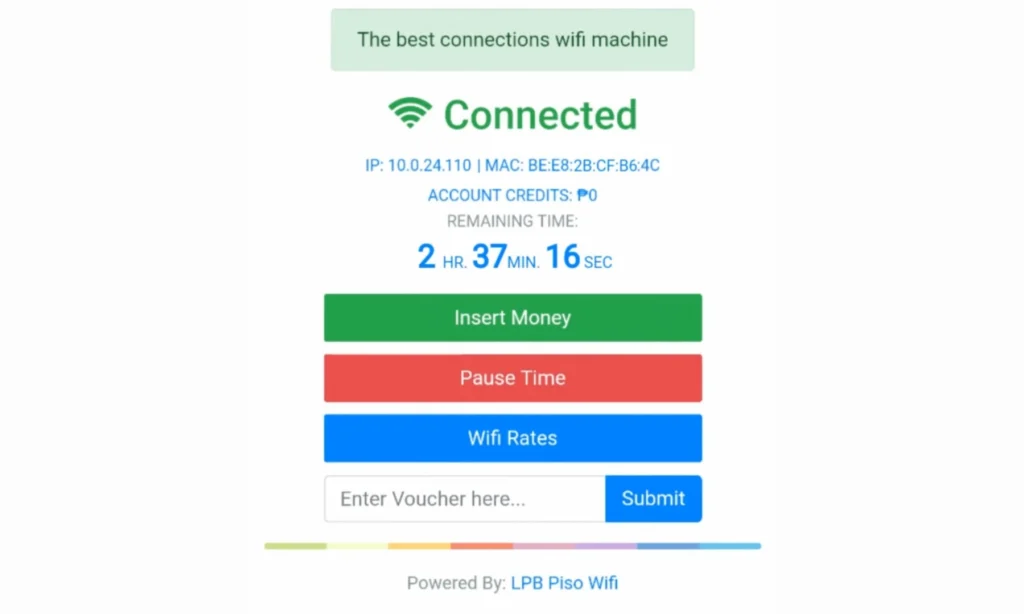
- Time management: Automatically disconnect users once their paid time runs out.
- Pause and resume: Temporarily pause sessions and allow users to resume later without losing balance.
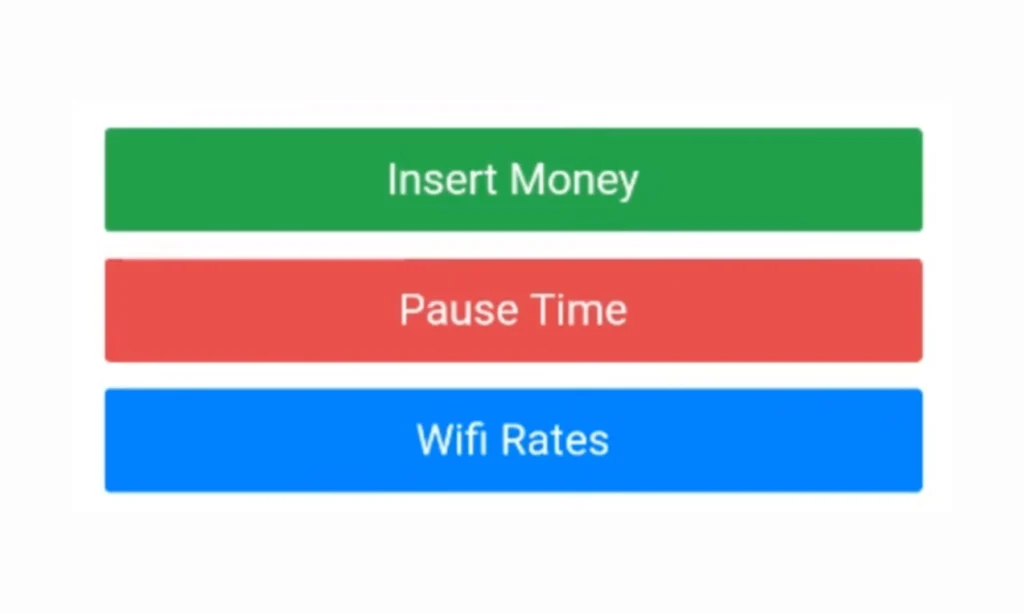
Usage tracking: View reports on total users, income, and connection history.
Why It’s Different:
LPB Piso WiFi routers combine traditional Wi-Fi management with vending and access control features, making them ideal for public or shared internet setups.
3. Customizing the Router IP Address
You are not limited to using 10.0.0.1 as your router’s IP address. Many routers allow you to assign a different private IP address if you prefer to personalize your network or prevent conflicts.
Steps to Change the IP:
- Log in to your router using 10.0.0.1.
- Open LAN Settings or Network Configuration.
- Find the option labeled Router IP Address or Gateway IP.
- Enter a new valid private IP, such as 10.0.1.1 or 192.168.10.1.
- Save the settings and restart your router.
Once changed, you will need to use the new IP address to access the admin panel going forward.
If You Forget the New IP:
You can perform a factory reset by holding the reset button for 10 to 15 seconds. This restores the router to its default settings, including the original IP 10.0.0.1 and default username and password.
Easy Setup Tips for Faster and Safer Internet
Setting up your router correctly through 10.0.0.1 can make a big difference in how fast, stable, and secure your internet connection feels. Whether you’re using an Xfinity, Comcast, or another compatible router, minor tweaks in setup and placement can dramatically boost performance and reliability.
1. Select the Ideal Wireless Channel for Speed
Best Channels for 2.4 GHz Band
If you’re using a 2.4 GHz connection, choose channels 1, 6, or 11 to reduce interference from nearby networks. These are the only non-overlapping channels, making them more reliable in crowded environments like apartment buildings.
Use 5 GHz for High-Speed Performance
If your router supports it, switch to the 5 GHz band for faster speeds and smoother performance. The 5 GHz range offers more available channels and less signal overlap, making it great for gaming, streaming, and video calls.
Automatic Channel Selection
Some routers automatically choose the least congested channel. Enable this option if you’re unsure which one to pick for your area.
2. Secure Your Router Immediately After Login
Change Default Credentials
As soon as you log in through 10.0.0.1, update your admin username and password. Default credentials are public and easily guessable, making your router vulnerable to unauthorized access.
Pro Tip: Use a strong password that’s at least 8–12 characters long, with a mix of uppercase and lowercase letters, numbers, and symbols.
Separate Admin and Wi-Fi Passwords
Keep your router admin password different from your Wi-Fi password. This adds another layer of security to protect your network settings.
Why It's Important
Changing the default login information ensures no one else can alter your configuration or compromise your Wi-Fi network.
3. Position Your Router for Maximum Signal Strength
Find the Best Location
Place your router in a central, elevated position in your home or office. Setting it on a high shelf or mounting it on a wall helps the Wi-Fi signal reach every corner more evenly.
Avoid Signal Interference
Keep the router away from thick walls, metal furniture, or electronic devices such as microwaves, cordless phones, or Bluetooth speakers, as they can interfere with the Wi-Fi signal.
Why It Matters
A well-placed router improves both speed and stability, reducing dead zones and ensuring a smoother connection across all your devices.
4. Ensure a Reliable Connection Setup
Before making advanced changes, confirm that your network connection is stable and your router is correctly connected to your modem or internet source. A weak or unstable link can limit your speed, no matter how well your router is configured.
Quick Checks:
- Verify that the Ethernet cable is securely plugged in.
- Ensure your router’s firmware is up to date through the admin panel at 10.0.0.1 and restart the router.
5. Why These Settings Matter
By fine-tuning your setup through 10.0.0.1, you can:
- Improve Wi-Fi range and stability across all rooms.
- Strengthen network security by removing default credentials.
- Optimize internet speed by selecting the best frequency band and channels.
- Reduce signal interference from nearby networks or household devices.
LPB Piso WiFi Using 10.0.0.1 for Smart Internet Vending
LPB Piso WiFi (Lintech Piso WiFi Box) is a popular vending system in the Philippines that provides affordable, timed internet access. It can be easily managed through the 10.0.0.1 admin login page, allowing owners to set prices and time limits and monitor users.
Users connect to the Wi-Fi, insert coins, and access the internet for a set duration. One of its best features is the pause time option, which lets users stop their session and resume later without losing remaining minutes.
To manage your Piso WiFi:
- Open a browser and go to http://10.0.0.1 (avoid typing 10.0.0.0.1, it’s invalid).
- Log in using your admin credentials.
- Adjust settings like pricing, pause time, and bandwidth limits.
LPB Piso WiFi is ideal for small businesses, stores, or public spaces, giving both owners and users an innovative, profitable, and flexible internet solution.
Frequently Asked Questions
What is 10.0.0.1?
It’s a private IP address used to open your router’s admin panel. You can use it to change Wi-Fi passwords, manage devices, and adjust network settings.
How do I log in to 10.0.0.1?
Connect to your router, open a browser, and type http://10.0.0.1. Then enter your admin username and password to log in.
What are the default login details for 10.0.0.1?
- Username: admin
- Password: admin or password
What routers use 10.0.0.1?
Routers from Xfinity, Comcast, Cisco, Technicolor, Arris, and SMC often use 10.0.0.1 as their default login IP.
Does 10.0.0.1 work without the internet?
Yes. You can access your router settings locally even if the internet is not working, as long as your device is connected to the router.